


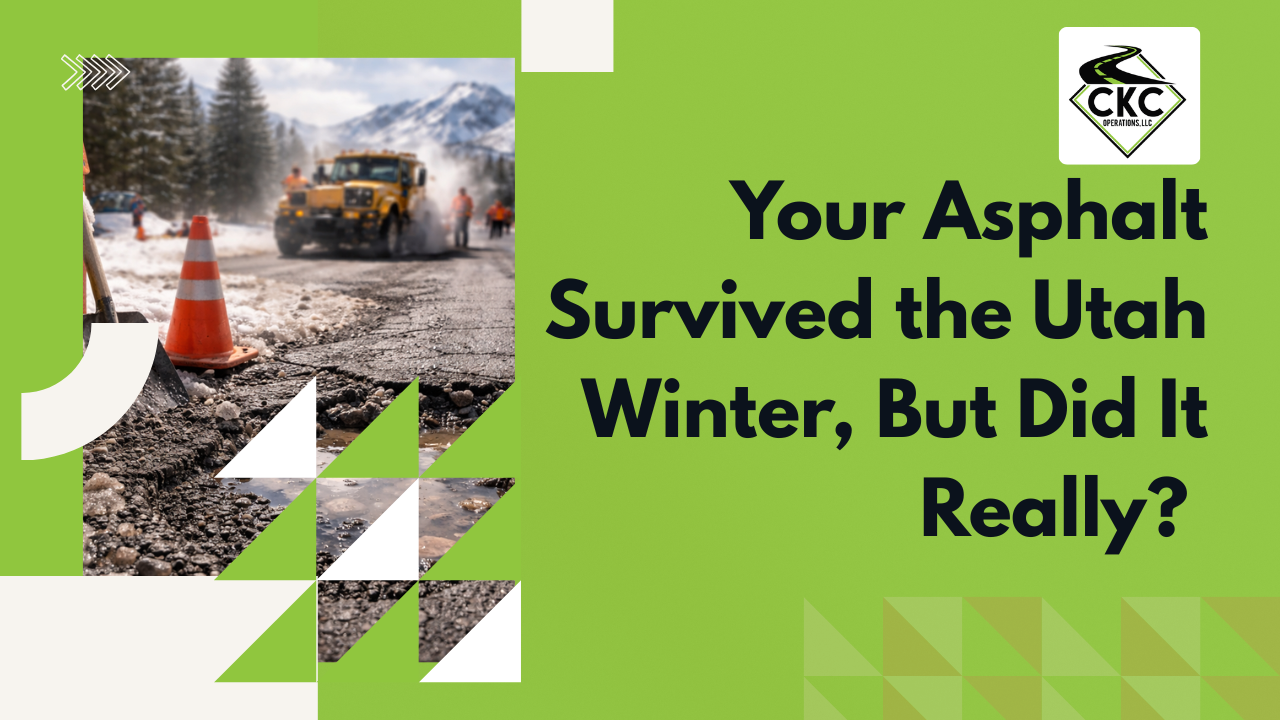
Your Asphalt Survived the Utah Winter, But Did It Really?
Utah winters are among the harshest in the Intermountain West — and if you own a driveway, parking lot, or private road in the Uintah Basin, your asphalt has taken the brunt of it. Between heavy snowfall, sub-zero temperatures, and the relentless freeze–thaw cycles that define our region, pavement surfaces go through tremendous stress every single winter season.
What looked like a minor crack in October can be a full-blown pothole by March.
At CKC Operations, we’ve served property owners, municipalities, and businesses in the Uintah Basin for four generations. Every spring, we see the same pattern: damage that could have been caught early — and fixed cheaply — has compounded into something far more serious. This guide is designed to help you understand what’s happening to your asphalt and what to do about it before it gets worse. :contentReference[oaicite:0]{index=0}
Utah Winters Don’t Just Snow on Your Pavement — They Destroy It From the Inside
Asphalt is engineered to flex and resist wear, but it was never designed to handle repeated temperature extremes without maintenance. In Roosevelt and across Duchesne County, winter temperatures routinely swing from well below freezing at night to above-freezing during the day. That cycle is what does the most damage.
Here’s how it happens:
Moisture from snow and ice finds its way into small cracks and porous spots in the pavement. When temperatures drop, that moisture freezes and expands — putting intense outward pressure on the surrounding asphalt. As it melts, the crack reopens. The next freeze pushes it wider still. By the time spring arrives, what started as a hairline crack can be several inches wide and deep.
Compound that with the weight of loaded trucks, snowplow blades, and de-icing salts, and you have a recipe for rapid deterioration.
Read More: Why Do Traditional Road Maintenance Methods Struggle to Keep Up?
5 Ways Winter Just Wrecked Your Pavement (And You Might Not Even Know It Yet)
1. Potholes — The Ones That Swallow Tires and Budgets
The most visible sign of winter damage. Potholes form when water infiltrates beneath the surface, weakens the base layer, and the pavement collapses under traffic load. Left unpatched, they grow quickly and can damage vehicles — creating liability exposure for commercial property owners.
2. Cracks That Grew All Winter While You Weren’t Looking
Existing cracks don’t stay the same size over winter. Freeze–thaw cycling causes them to expand both in width and depth. If the original crack wasn’t sealed before winter, water has now worked its way deeper into the pavement structure.
3. Heaving and Buckling — When the Ground Itself Pushes Back
When soil beneath the asphalt freezes and thaws repeatedly, it can shift — causing sections of pavement to rise, drop, or tilt unevenly. This is especially common on older surfaces or areas with poor drainage.
4. Crumbling Edges — The Snowplow’s Parting Gift
Driveway and parking lot edges are the most vulnerable areas because they lack lateral support. Snowplow passes, vehicle overruns, and meltwater pooling along edges can cause them to break away entirely over a single winter.
5. Base Layer Saturation — The Silent Killer Beneath Your Feet
The most serious and costly outcome. When water makes it through the asphalt surface and into the aggregate base below, the base loses its load-bearing strength. Widespread surface failure follows — and at that point, patching alone won’t solve the problem.
One Ignored Crack This Spring = A $5,000 Repair Bill This Summer
Here’s what most property owners don’t realize: the difference between a $300 crack seal and a $5,000 asphalt replacement is often just one season of neglect.
Early spring is the ideal window for repairs. The pavement is accessible, damage is fresh and contained, and the ground conditions are right for patching and sealing. Wait until summer, and you risk allowing moisture to continue working deeper into your pavement structure — particularly if spring rains follow the winter snowmelt.
Proactive maintenance consistently delivers a better return on investment than reactive repairs. That’s been true across the hundreds of projects CKC Operations has completed throughout the Uintah Basin.
How CKC Operations Fixes What Winter Broke
We offer the full range of asphalt repair and maintenance services needed to address winter damage, from minor surface issues to structural failures.
| Service | What It Does |
|---|---|
| Crack Sealing | Prevents water intrusion by filling and sealing existing cracks before they expand. |
| Asphalt Patching | Restores structural integrity for potholes and damaged areas. |
| Seal Coating | Protects asphalt from water, UV damage, and oxidation. |
| Chip Seal | Cost-effective resurfacing for worn roads and surfaces. |
| Full Asphalt Repair & Resurfacing | Used when structural damage is extensive and requires full restoration. |
We work on:
Commercial parking lots
Residential driveways
Industrial yards and loading areas
Private roads and access roads
Municipal streets and county roads
Don’t Wait for a Pothole to Tell You There’s a Problem — Get Ahead of It Now
CKC Operations is currently offering Spring and Winter Damage Assessments for property owners across the Uintah Basin. Our experienced crew will walk your pavement, evaluate surface and structural conditions, assess drainage issues, and provide a clear, no-pressure recommendation.
We’ve earned the National Asphalt Pavement Association (NAPA) Diamond Achievement Award — and our clients, including UDOT, Utah State University, and municipalities across Duchesne County, trust us to do the job right.
Don’t let winter damage become a summer reconstruction project.
Contact CKC Operations Today
Phone: 435-646-3311
Email: info@ckcoperationsllc.com
Address: 3843 S. Highway 40, Roosevelt, UT 84066
Hours: Monday–Friday, 7AM to 6PM
Online: ckcoperationsllc.com/contact-us
CKC Operations, LLC — Four Generations of Pride in the Uintah Basin